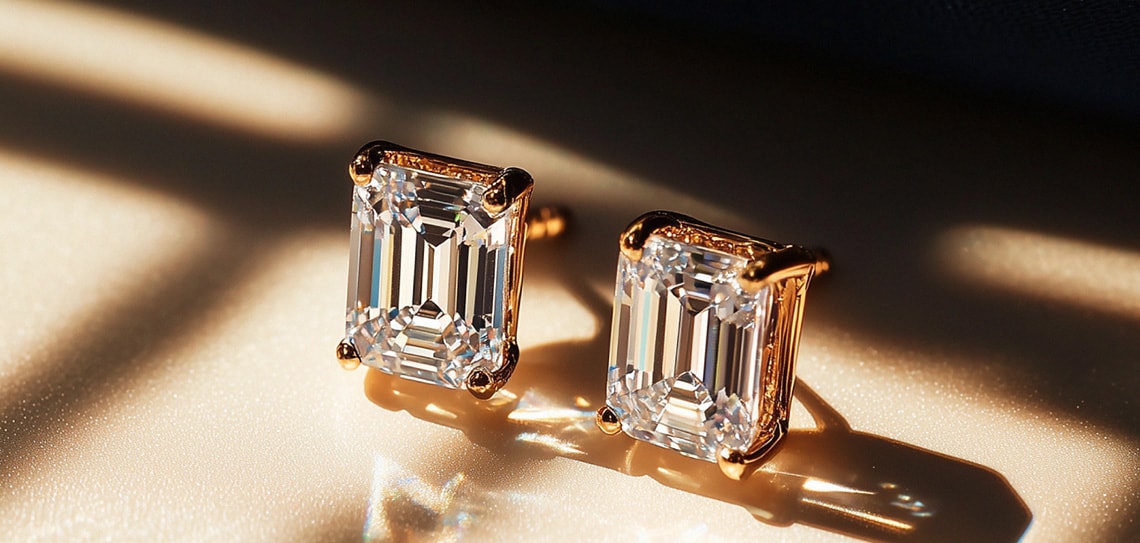
Your Guide to Earring Prong Settings
When it comes to diamond earrings, the way your diamonds are set makes a big difference in both appearance and security. That’s where the earring prong setting comes in. These tiny prongs hold the diamond in place while showcasing its brilliance, and choosing the right prong setting can make or break your look.
In this guide, we’ll explain the different types of diamond earring settings and help you choose the perfect option for your next pair of earrings.
What is an Earring Prong Setting?
Before diving into the different types of settings, let’s start with the basics - what exactly is an earring prong setting? Think of it as a small set of "claws" that grip the center stone (usually a diamond) and hold it securely in place.
These prongs are typically made of a precious metal like gold or platinum, and they serve two important purposes: keeping the diamond safe and maximizing how much light hits the stone to enhance its sparkle.
The beauty of the prong setting is that it allows the diamond to be showcased with minimal metal covering it. Unlike other settings that may wrap around the diamond, the prong setting leaves most of the stone exposed, giving it that extra brilliance we all love.
Choosing earrings for everyday wear or something more special? Either way, the right prong setting can elevate your earrings and keep your diamonds secure for years to come!
So, are you looking for the perfect diamond earrings? Explore Brilliance's stunning collection of earrings, from classic prong settings to custom designs. And don’t forget - our expert team is ready to help you find the pair that suits your style perfectly.
Types of Earring Prong Settings
There are several types of earring prong settings, and each has its unique look and level of security. Here’s a deeper dive into some of the most common ones:
1. 3 Prong vs 4 Prong Diamond Studs
The choice between a 3-prong setting and a 4-prong setting is one of the most common debates in the world of diamond earrings.
A 3-prong setting (also known as a "martini setting") offers a sleek and minimalist look. With fewer prongs, the diamond is more exposed, allowing more light to hit it, enhancing its brilliance. However, with only three prongs holding the stone, some people worry about the diamond being less secure, especially for larger diamonds.
A 4-prong setting, on the other hand, offers a bit more security and is the more traditional choice. It holds the diamond in place from four points, making it a little more stable. Many people find that four prongs give the diamond a balanced, symmetrical look that’s perfect for both casual and formal wear. The extra prong also adds to the overall strength of the setting, which is why it’s so popular for diamond stud earrings.
2. 4 Prongs vs 6 Prong Diamond Studs
The debate between 4 prongs vs 6 prong diamond studs has been going on for a long time, especially among those who love larger diamonds. So, let's break it down in detail. While both options provide a secure setting, the main difference is in how much metal is used and how much of the diamond is visible.
With 4 prongs, you get more light exposure because less metal is covering the stone. This makes it a popular choice for smaller diamonds, where you want the sparkle to take center stage.
However, for diamonds that are 1 carat or larger, many people prefer a 6-prong setting. The additional prongs provide extra support, which gives peace of mind, especially if you’re concerned about the security of your stone.
Choosing between the two really comes down to how you balance security with aesthetics. Four-prong settings are perfect if you’re prioritizing sparkle, while six-prong settings are ideal if security and protection are your main concerns - especially for larger diamonds.
3. Claw Prongs vs V-Shaped Prongs
Another interesting variation in prong settings comes down to the shape of the prongs themselves.
Claw prongs are designed to look like tiny claws gripping the diamond, giving it a secure and edgy look. These prongs are often pointed and add a little extra visual interest to the setting.
On the other hand, V-shaped prongs are typically used for diamonds with pointed corners, like princess or marquise-cut diamonds. The V-shape protects the delicate corners of these diamond shapes, reducing the risk of chipping or damage while still offering plenty of light exposure.
4. Double Prong Setting
A double-prong setting, as the name suggests, features two smaller prongs at each point of the diamond. This setting is both functional and stylish, as it offers extra security while maintaining a delicate look. It’s an excellent choice if you’re working with a larger diamond or want the peace of mind that comes with having extra support for your stone.
Each of these settings has its advantages depending on the carat weight, diamond shapes, and the overall look you're going for. Understanding these options will help you choose a setting that fits your style and ensures your diamonds stay secure.
Choosing Between 4 Prongs vs 6 Prong Diamond Studs
Now, this one deserved a special part in this guide since the debate between 4 prongs vs. 6 prong diamond studs has been going on for years - and for a good reason.
It’s not just about aesthetics; it’s about balancing beauty and security. So, let’s break it down further and in more detail than above to help you understand it even better:
- 4 Prongs: This setting is the classic go-to for most diamond stud earrings. With only four prongs, more light can pass through the diamond, which makes it sparkle more. This is why it’s often the preferred choice for diamonds under 1 carat, which is also a perfect size for children. Fewer prongs also create a more delicate, minimalist look, which many people love for everyday wear. But remember, fewer prongs also mean slightly less security, so it’s best for smaller diamonds or people who prioritize sparkle over security.
- 6 Prongs: The six-prong setting adds two extra prongs for a total of six points holding the diamond. This offers more support, making it an excellent option for larger diamonds. More prongs mean the stone is less likely to move or become loose over time, which is why many people choose it for diamonds over 1 carat. Although a six-prong setting does cover a bit more of the diamond with metal, the added security is worth it, especially for high-value stones. It’s the go-to choice for those who want to balance beauty with peace of mind.
Choosing between the two really comes down to what’s most important to you: maximizing light exposure or ensuring maximum security. Both settings are beautiful and functional in their own way, so it’s all about finding the balance that fits your lifestyle and style preferences.
At Brilliance, we offer a wide selection of both natural and lab-grown diamonds - loose or in jewelry! Perfect for any earring setting, we have something for everyone. So don’t walk - run and check out our diamond collection for yourself!
Other Popular Earring Settings
While prong settings are among the most common choices, there are several other types of diamond earring settings to consider, each offering a unique blend of style and functionality.
Let’s take a closer look at some of these popular options and how they might be the perfect fit for your next pair of diamond earrings.
1. Bezel Setting
The bezel setting is known for its modern, sleek design. Instead of using prongs to hold the diamond, a thin metal rim wraps around the diamond’s edge, holding it securely in place. This setting offers exceptional protection for the stone, making it an ideal choice for those who are concerned about their diamond’s safety. It’s especially great for people who lead active lifestyles, as the metal surrounding the diamond reduces the risk of damage.
However, one trade-off is that the bezel covers more of the diamond, which can slightly reduce its brilliance compared to a prong setting. That said, for those who prioritize security and a modern look, the bezel setting is hard to beat.
2. Halo Settings
A halo setting adds an extra layer of sparkle by surrounding the main diamond with smaller stones. These smaller diamonds are typically set in shared prong settings or other secure methods, creating a "halo" effect around the center diamond. The main advantage of a halo setting is that it makes the central diamond appear larger, which is a great way to maximize the wow factor without paying for a much bigger diamond.
Plus, it adds even more brilliance to the earring, making it an excellent option for special occasions. Halo settings are often used in diamond rings and engagement rings, but they look just as stunning on earrings.
3. Martini Settings
Named after it resembles a martini glass, the martini setting is a minimalist and elegant option for diamond earrings. The setting allows the diamond to sit low and close to the ear, creating a sleek look that showcases the diamond with minimal metal. It’s especially great for smaller diamonds, as the design allows them to stand out more.
If you prefer a simple, timeless design that emphasizes the diamond’s brilliance, a martini setting could be the perfect choice!
4. Basket Settings
A basket setting creates a cage-like structure beneath the diamond, holding it securely while allowing for more light to pass through. It’s a versatile setting that offers both security and brilliance. The design is similar to prong settings but with added support from the basket-like structure.
This setting is ideal for those who want to combine the elegance of prongs with a bit more stability, especially for larger diamonds.
5. Illusion Setting
The illusion setting is designed to make a smaller diamond appear larger. By using clever design techniques and a reflective metal surface, this setting creates the illusion of a bigger diamond. It’s perfect for those who want to maximize sparkle without paying for a larger stone. While it may not be as secure as a bezel or basket setting, it offers a unique way to get more visual impact from your diamonds.
These types of diamond earring settings provide a wide range of options, from modern minimalism to extra sparkle, ensuring there’s something for everyone.
Customize Your Earrings
When it comes to choosing the perfect earring prong setting, one of the best parts is how customizable it can be. It doesn’t matter if you are looking for a secure setting for your center stone or something that will enhance the brilliance of your diamonds; there’s a lot of room for personalization.
At Brilliance, we offer a wide range of options to help you design your dream earrings! Whether you want to explore different prong styles or settings like martini settings or a bezel setting, our expert team can guide you every step of the way. From choosing the precious metal to selecting the best diamond shapes and carat weight, you can create custom earrings and other jewelry that reflect your unique taste and lifestyle.
So, no matter if you're designing earrings for everyday wear or a special event, you'll find that customizing your prong settings opens up endless possibilities for personalization.
Find Your Ideal Earring Prong Setting with Brilliance
When choosing diamond earrings, the way they’re set makes all the difference in both appearance and security. Whether you're thinking about different prong styles or considering alternative settings, each one brings its charm.
Trust us: once you find the right setting, you can make your earrings feel even more special, adding a perfect balance of elegance and durability for any occasion.
And remember, we at Brilliance are here to help you find the perfect jewelry! Contact us today with any questions - we look forward to hearing from you!