How to Buy a Diamond: The Ultimate Diamond Buying Guide
Diamonds are as unique as they are rare, so it should come as no surprise that not all are created equal. This can make diamond shopping, especially for first-time diamond buyers, seem overwhelming. “Buying a diamond can be intimidating. Finding a beautiful diamond is easy; finding the right one for your taste and budget is more of a challenge,” states the American Gem Society. We couldn't agree more.
That's why this all-in-one diamond buying guide will take you through every step of the diamond buying process and the many factors involved in finding high-quality options among the wide range of choices and price ranges so you can be confident in your decision.
Learning how to buy a diamond has never been easier.
What Is Most Important When Buying a Diamond? Key Elements to Consider
When buying diamonds, which diamond parameters should you focus on? Among all the variations and options available, how do you pick a diamond that will meet your expectations? Some diamond education will give a good idea of what to look for when shopping around for that perfect stone.
The following key aspects serve as a detailed diamond buying guide, allowing diamond buyers to search, identify, and buy the perfect diamond with confidence.
• The Diamond 4Cs - Carat (weight), color, clarity, and cut
• Diamond shape
• Certification by a trusted gem lab
• Knowing when to ask for help
Every polished diamond is valuable. However, a diamond’s characteristics determine how high we value it compared to other diamonds. Jewelry professionals use systematic grading scales to evaluate each stone and determine diamond quality, which directly impacts diamond prices.
The 4Cs of Diamond Shopping: Diamond Grading Basics
Knowing how to buy a diamond often begins with the 4Cs of diamonds. Doing your research and examining a diamond's certification is certainly necessary. However, if you don’t know what you’re looking at, even a certificate or a grading report is useless. Understanding the 4Cs allows you to identify excellent diamonds in a sea of less excellent options, ensuring you get the value you expect from your diamond purchase.
The 4Cs of diamond grading include:
• Carat Weight: The size and weight of a diamond;
• Color: How colorless a diamond is;
• Clarity: Absence of internal or external flaws;
• Cut: How well a diamond’s facets interact with light, affecting its brilliance and sparkle.
The value of a diamond is often determined by the rarity of one or more of the 4Cs. For instance, colorless diamonds are the rarest and, thus, the most valuable. The same applies to clarity grades (fewer imperfections are more rare), carat weight (heavier stones are less common), and cut (perfect angles are hardest to achieve). Let's delve into each one in more detail.
1. Diamond Carat Weight
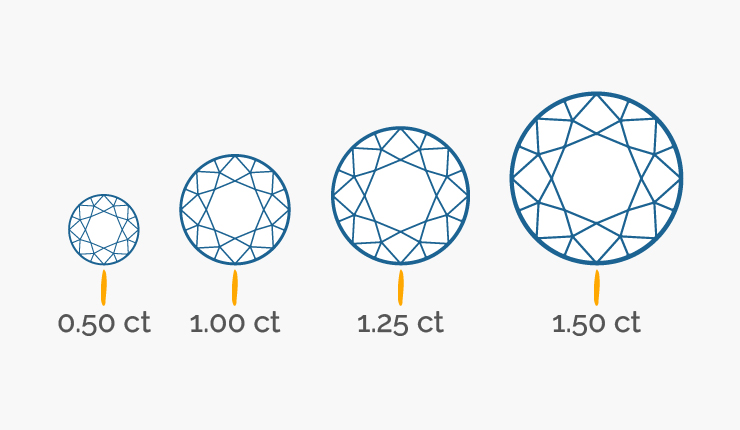
If you want to buy a diamond, you need to know the truth about carat weight. Many diamond buyers equate the diamond price with carat weight alone. This is a common misconception guiding people's selection of diamonds more often than it should. There are a variety of elements involved in determining a diamond’s value and price. For instance, you can have two diamonds with the same carat weight but two very different prices.
Diamonds are weighed with extreme precision. Carat weight is expressed in metric carats, as seen in the most common weights like ½-carat (half-carat diamond), ¾-carat, one-carat, two-carat, etc. However, diamonds over one-carat weight are expressed in carats and decimals. For example, a one-carat diamond may actually weigh 1.02 carats. Diamonds under one-carat are expressed as decimals referred to as points. A ½-carat diamond is actually a 0.50-ct diamond or fifty points.
As the GIA explains, “Each carat can be subdivided into 100 points. This allows very precise measurements to the hundredth decimal place.” Knowing how to use carat weight to your advantage when buying diamonds is all about these metrics. A 0.97-carat diamond will have no significant difference in visual size when compared to a 1.02-carat diamond. The difference in price, however, will be quite noticeable.
Diamond Size
Another common misconception is that carat weight is the ultimate judge of size. This is not the case. Cut plays an important role in the visual size of a diamond, while certain setting styles can also produce the appearance of a larger diamond.
Only the actual measurements of the stone will tell you how big a diamond looks, so don’t get too caught up on carat weight when it comes to diamond sizing. Learn more about the average diamond sizes and what they mean for your purchase.
2. Diamond Color Grading
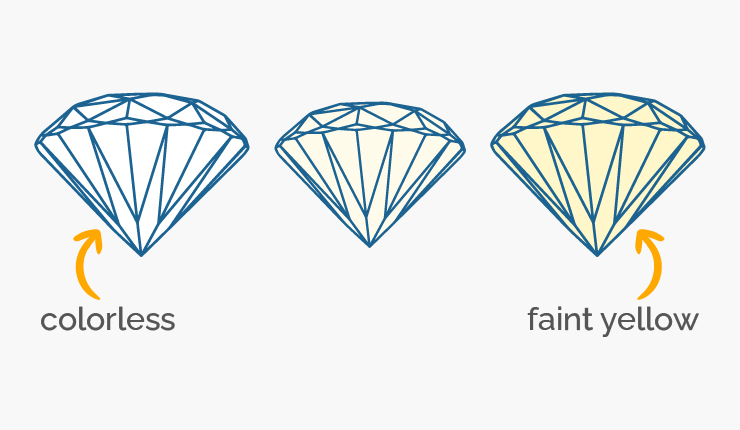
When understanding how to buy a diamond with confidence, it is important to keep your specific preferences and budget in mind. Diamond color is often considered the most subjective diamond grade, and what you think of as acceptable will largely be a matter of taste. However, differences in a diamond’s color grade can have a significant impact on its value.
For example, two diamonds with the exact carat weight, cut, and clarity can differ in cost based on different color grades. Colorless diamonds are the rarest, as most diamonds will have color, such as a light yellow or brown hint, although not always visible to the naked eye. Diamond color grades range on a scale from D-Z:
• D – Colorless: This is the absolute highest color grade a diamond can get, considered the most rare and most valuable.
• E and F – Colorless: Also considered colorless but with very slight hints of color compared to a D color stone, impossible to detect by the untrained naked eye. These diamonds are also quite rare and valuable.
• G and H – Near Colorless: G-H color diamonds will appear colorless to the untrained eye and are considered to be of excellent value.
• I and J – Near Colorless: Still reserved for exceptional diamonds, these grades indicate stones that have a slight warmth and tone, usually invisible to the naked eye.
• K to M – Noticeable Color: K-M color diamonds have a hint of identifiable yellow or brown even to the naked eye.
The color grading scale goes all the way to Z, but diamonds graded lower than M are not often found on the market because of their low quality.
Diamond Fluorescence
Another aspect of diamond color to consider when learning how to buy diamonds is fluorescence, or how a diamond reacts to ultraviolet (UV) light. Fluorescence can be found in around 35 % of diamonds. Fluorescent diamonds will glow a faint hue under UV light. Blue diamond hue is the most common, though colors including white, orange, and yellow, among others, are also possible.
Diamond’s fluorescence can be beneficial in some cases. For instance, a yellowish diamond with blue fluorescence may appear colorless. “In many instances, observers prefer the appearance of diamonds that have medium to strong fluorescence,” the GIA found. However, if it is too strong or accompanied by a low clarity grade with many inclusions, your diamond could appear cloudy.
This can impact value, but real beauty is still in the eye of the beholder and a matter of the buyer’s personal preference.
3. Diamond Clarity
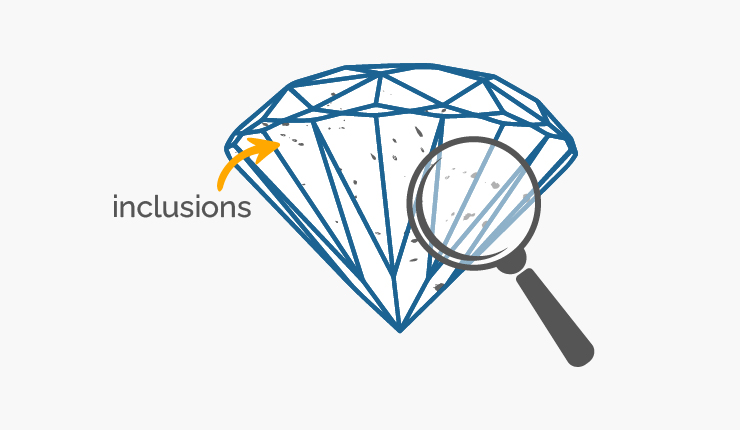
Diamond clarity is all about transparency. A diamond’s clarity grade is evaluated by analyzing diamonds for inclusions and blemishes, or lack thereof. The fewer inclusions and blemishes, the better the grade and the higher the value. Knowing how to buy a diamond with the level of clarity that meets your preference requires understanding what these are.
Inclusions are simply part of a diamond’s creation process deep within the earth, and blemishes are the result of polishing or wear on a diamond. Inclusions are internal, while blemishes are found on a diamond’s surface. Diamond clarity is graded using the following aspects:
• Inclusion size
• Inclusion nature
• Amount of inclusions
• Location of inclusions
• Relief
Inclusions and blemishes are often too small to identify with the naked eye, and jewelry professionals grade clarity using 10x magnification. This is the industry standard and important to recognize when learning how to buy a diamond.
Diamond Clarity Scale
Once graders have plotted the inclusions and blemishes, they use a clarity grade scale to identify the highest clarity from the lowest, which also affects diamond pricing. Based on clarity, diamonds are graded on a scale from Flawless (FL) to Included 3 (I3):
• FL – Flawless: No internal or surface blemishes exist. This is the most valuable grade.
• IF - Internally Flawless: No internal imperfections. IF-grade diamonds are also very rare.
• VVS1 or VVS2 - Very, Very Slightly Included: Imperfections are very difficult to identify using 10x magnification. This is an excellent, rare diamond.
• VS1 or VS2 - Very Slightly Included: Imperfections are difficult to see with 10x magnification. This is a very good clarity grade.
• SI1 or SI2 - Slightly Included: Imperfections can be seen under magnification but are considered eye-clean diamonds. This is a good grade.
• I1 to I3 - Included: Inclusions are noticeable without inspecting the diamond under magnification. These diamonds are considered fair.
4. Diamond Cut
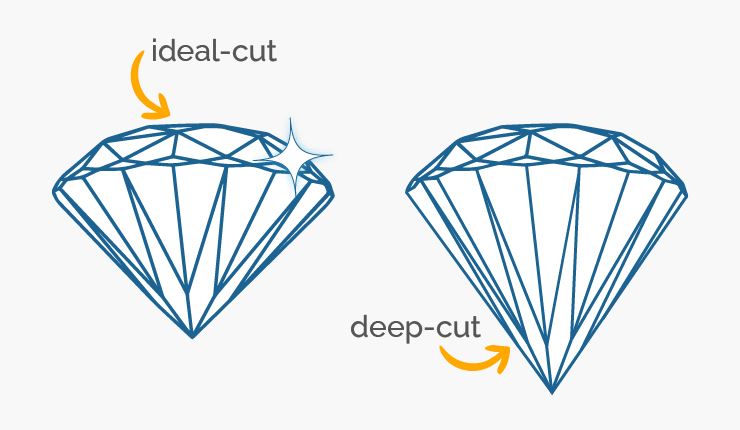
Understanding diamond cut quality is essential to knowing how to buy a diamond that will meet your standards. The cut of a diamond is the art of its beauty – it's what makes every angle and facet dazzle when interacting with light. A well-polished and symmetrical diamond will ensure it uses light most effectively. A well-cut diamond will appear brilliant and fiery with superb scintillation – probably the one that will catch your eye in diamond jewelry stores.
Diamonds are cut with three optical effects:
Brilliance
The two fundamental aspects of the brilliance of diamonds are contrast and brightness. Bright diamonds return maximum light, meaning light entering the top of the stone is reflected to the top by the lower facets. The light that doesn’t return from the lower facets creates areas of contrast. A stone that is cut too deep or shallow will have more dark areas.
Fire
Fire is a measure of the prismatic effect of a diamond and how different colors of light flash in low-light conditions. Diamonds with the most fire are those with smaller tables and steep crown angles. Fancy cuts such as marquise or pear shapes and “old” cut diamonds often have the most fire.
Scintillation
Scintillation is a technical term for the sparkle of a diamond – the balance of black and white under light. Fire can actually add to a diamond’s scintillation under direct light. The best cut for scintillation and additional sparkle is one that has many facets across the diamond’s surface for light to reflect off of.
AGS Diamond Cut Grading Scale
Different gemological laboratories use different nomenclature when grading diamond cuts. The American Gem Society has developed a diamond cut grading scale that rates from 0 to 10, which is useful when understanding how to buy a diamond. Their grading scale examines essential elements associated with a diamond’s cut in order to ensure the proportions will maximize fire and brilliance for that extra sparkle.
• 0 – Ideal Cut
• 1 – Excellent Cut
• 2 – Very Good Cut
• 3 & 4 – Good Cut
• 5 - 7 – Fair Cut
• 8 - 10 – Poor Cut
The elements that are examined to determine diamond cut grade include:
• Table Percentage
• Depth Percentage
• Crown Height and Angle
• Pavilion Depth and Angle
• Culet
• Girdle
• Star Length
Only round stones are given cut grades on diamond certificates, but all shapes have ideal ranges and values for the elements that impact the cut of the stone. You can learn more about how these factors affect the price in our beginner-friendly diamond cut value guide.
5. Diamond Shape
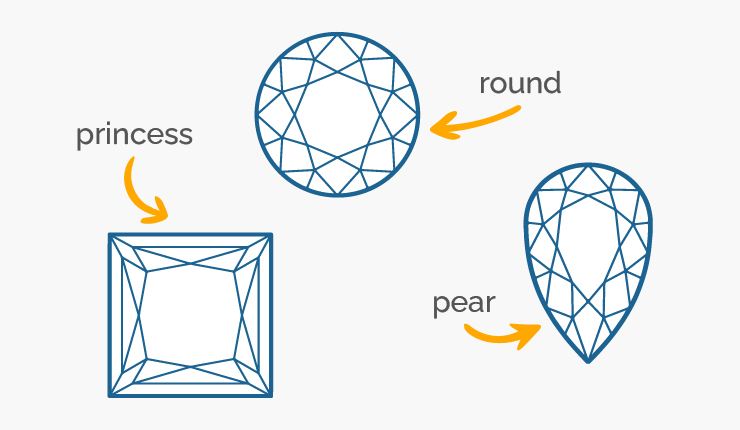
The cut of a diamond is also associated with the diamond shape, and these two terms are often used interchangeably. However, they mean two different things for expert jewelers. Cut refers to the arrangement of facets, while the shape is designated for the diamond’s outline. There are a variety of diamond shapes, all fashioned to accentuate a particular characteristic of the diamond.
The individual diamond properties can play more or less of a role depending on the diamond’s specific shape, so knowing what shape you are shopping for will also play a big role in terms of knowing how to buy a diamond. This is certainly a matter of preference; however, some shapes offer more fire and brilliance than others.
• Round Brilliant: The most popular shape, dating back to the 1700s, engineered to maximize fire and brilliance. According to research by The Knot, 53% of engagement ring center diamonds are round.
Diamond shapes other than the round brilliant diamond are called fancy shapes or fancies. Some of the most prominent fancy-shaped diamonds include:
• Princess: This square shape brings out pure brilliance. The light interacts with princess diamonds in a very unique way.
• Marquise: If you want an emphasis on size, this shape is perfect. It also makes the finger appear more slender.
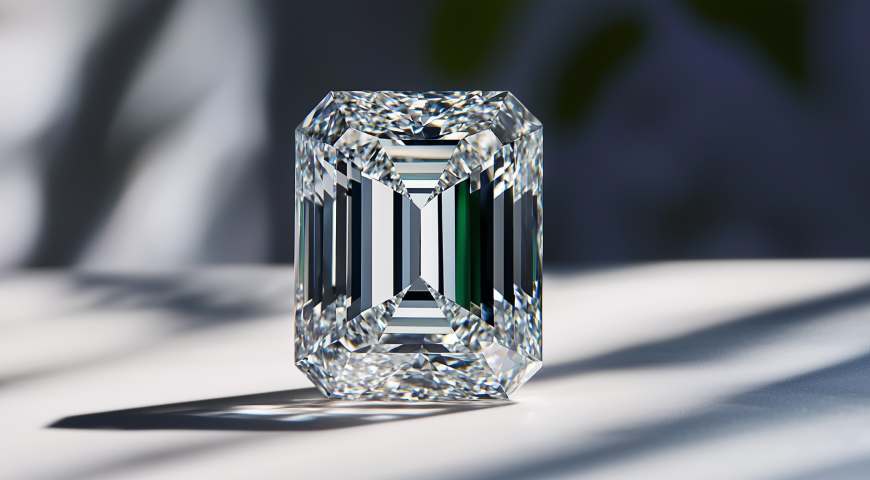
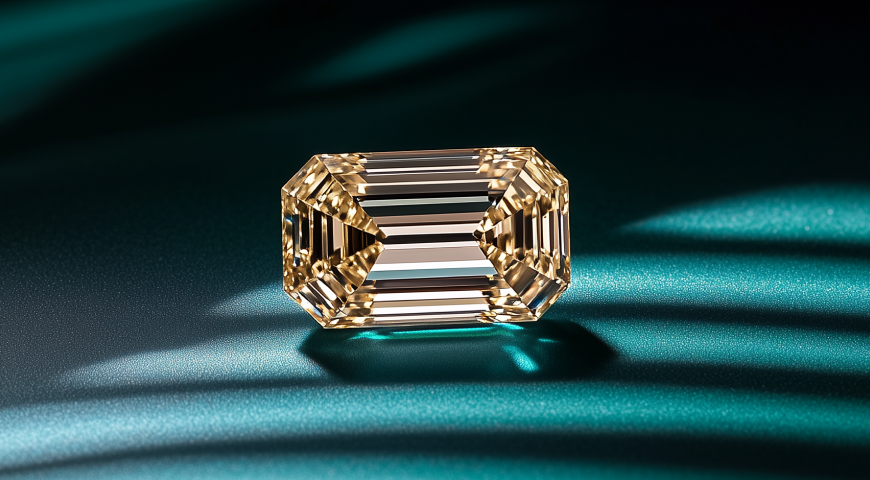
• Emerald: Offers sophistication by calling attention to the color and clarity of the stone. The large, step-cut facets offer large flashes of light and a clear view into the stone.
• Oval: Displays a very powerful brilliance that can only be matched by a round brilliant cut diamond.
• Asscher: Similar to the emerald, featuring step-cut facets. It is, however, square. The epitome of vintage opulence, it has been the choice of many well-known people, from Elizabeth Taylor to Zooey Deschanel.
Other popular diamond shapes include cushion, pear, radiant, and heart shaped diamonds. While style will drive the decision about what shape to buy more than anything else, each shape has unique advantages and disadvantages, from cost to brilliance to accentuated color or clarity.
6. Diamond Certification: Buying a Certified Diamond
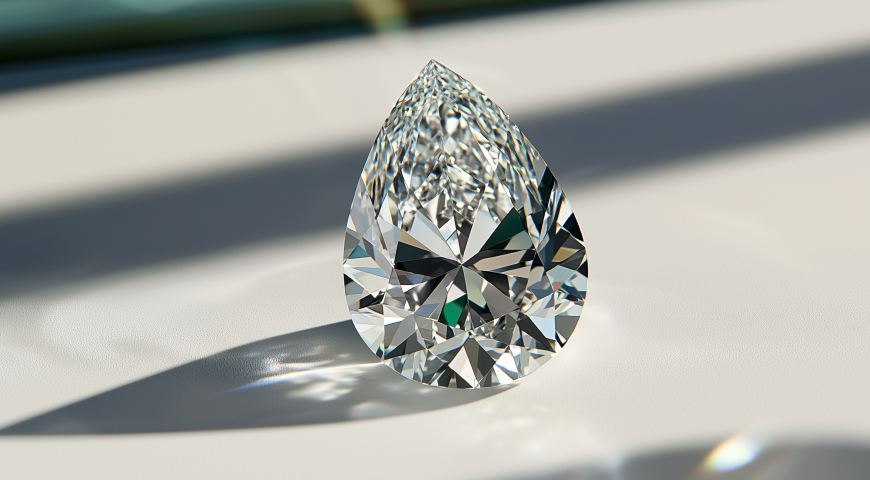
One of the most important factors impacting how to buy a diamond that delivers is diamond certification. Grading systems developed by gemological laboratories set the standard. These diamond grading labs represent the most trusted certifying bodies in the diamond industry, preventing inconsistent diamond grading.
Diamond Certification Bodies
• Gemological Institute of America (GIA)
• American Gem Society (AGS)
• EGL USA Gemological Laboratory (EGL)
• International Gemological Institute (IGI)
• HRD Antwerp (HRD)
Diamond Grading Reports & Certificates
• GIA Diamond Grading Report
• GIA Diamond Dossier
• GCAL Certificate of Diamond Authenticity
Shop Carefully: Know Who to Trust
A certified diamond tells you that a reputable laboratory has evaluated the diamond’s quality and unique characteristics, giving you proof that the diamond you want to purchase meets the claims of its seller. When buying diamonds, knowing that certification is reliable is key, whether you're shopping in-store or from online diamond vendors. Many big box stores, even major design houses, only offer in-house appraisals and certification.
Even if a jeweler offers an in-house certificate, it is vital to ask for a third-party diamond certificate from one of the diamond grading authorities above, as they feature multiple security features to protect against altering and falsification. If ends are peeled, or if it looks as if the certificate or grading report has been modified, it is best to deal with a different jeweler.
You can also go online to verify that the report in your hands matches the information stored in the applicable laboratory’s database.
7. Seeking Professional Help
Possessing key knowledge on how to buy diamonds using the 4Cs and having the certification to support a diamond’s grade certainly ensures the best purchasing experience. However, it’s still important to know when to seek professional help. As much as you might read on the internet, including this diamond guide, you’ll never be able to acquire the knowledge that someone who’s been in the industry for years has accumulated, and you shouldn’t feel like you have to, either.
So when you’re not sure what to think, know who to ask for an accurate diamond evaluation. At Brilliance, our diamond experts can provide professional diamond advice, answer any of your questions, and support your diamond purchase so you can select the best diamond for your needs without any hesitation. Feel free to reach out anytime.
Make a Smart Investment with the Right Diamond Choice: Shop at Brilliance
Whether you're shopping for diamond engagement rings, wedding rings, or everyday jewelry that will put a smile on someone's face, knowing how to buy a diamond is key to making an informed choice. At Brilliance, you'll find a diverse selection of conflict-free, certified natural and lab-grown diamonds in all colors, shapes, and sizes to choose from using this diamond buying guide.
With a focus on quality and exceptional craftsmanship, Brilliance offers a trustworthy online diamond buying experience for your peace of mind and a gem that will last for years to come. Explore our collections today, and don't hesitate to get in touch if you need diamond advice or tips from our experts.
We understand the pressure of making the right call, especially the weight that comes with choosing the "ring you can only buy once" – a decision that represents a lifetime of love, commitment, and personal significance, which is why we’re here to guide you in selecting the best diamond that really will last forever.
Diamond Buying Guide FAQs
Wondering how to buy a diamond that checks all your boxes? In case we missed anything in our diamond buying guide, we've addressed the most common diamond purchase questions to clear the air.
Which Type of Diamond Is Best?
There is no universally best diamond. One size does not fit all, so choosing the best diamond for you will depend on your personal preferences, needs, and budget. Natural diamonds are classic, but high-quality lab diamonds offer similar beauty at a lower price.
How Do I Choose a Diamond Wisely?
Consider the 4Cs of diamonds – carat weight, color, clarity, and cut. Balance these factors based on what matters most to you while staying within your budget. Also, always ensure you buy certified diamonds from a reputable source to guarantee authenticity and quality.
What Is a Good Carat for Diamonds?
A good carat weight depends on the occasion, personal taste, and budget. One-carat diamonds are a popular choice for engagement rings as they offer a good balance of size and value.
What Is Most Important for a Diamond to Sparkle?
The cut is the most crucial factor for a diamond’s sparkle because it determines how well the diamond interacts with light. A well-cut diamond reflects light from its facets in a way that maximizes brilliance (brightness), fire (colorful flashes), and scintillation (sparkle). The precision of angles, symmetry, and polish all contribute to how much light the diamond reflects and, thus, its sparkle.